

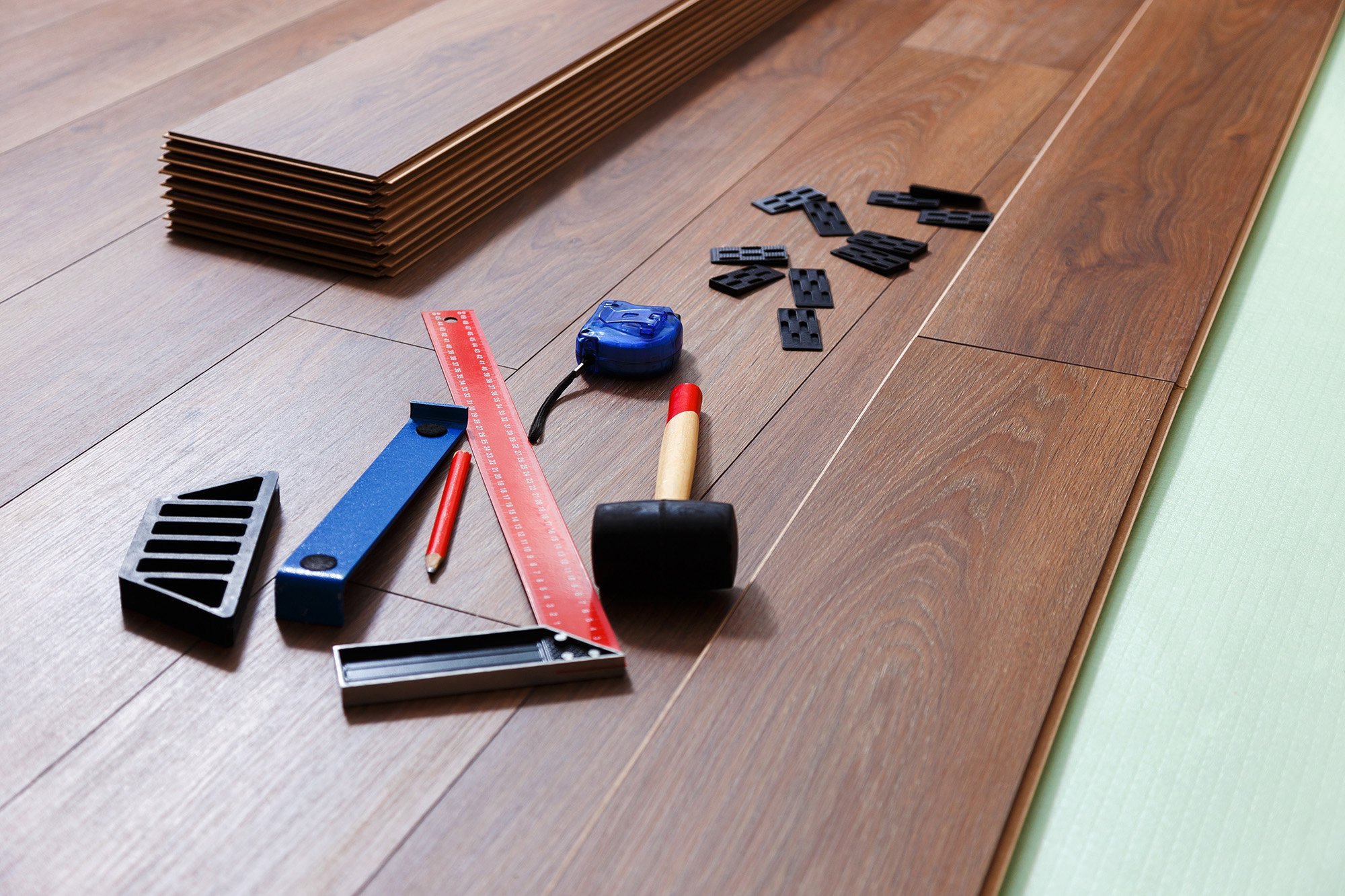
The Layer That Gets Skipped Over
Homeowners spend weeks choosing a flooring look and about thirty seconds on the underlayment line of the quote, usually treating it as a formality. But underlayment is doing real work between your subfloor and your finished floor, and the version you end up with changes the result in ways you will notice every day.
Part of the confusion is that underlayment is not one product. It is a category covering foam, felt, cork, rubber, and attached-pad options, and each does a different combination of jobs. Some prioritize sound, some moisture protection, some cushioning, and a few try to do several at once with varying success.
Sound Control and Where It Matters
Underlayment affects two different kinds of sound. The first is the noise you hear in the room itself, the hollow click of footsteps on a floating floor, which denser underlayments noticeably reduce. The second is sound transmission to the room below, which only matters in a two-story home or over a finished basement.
For single-story homes, which make up a lot of the housing stock around Granbury and the surrounding towns, the in-room sound is the one that matters, and it makes a real difference in how solid and substantial a floating floor feels underfoot. Homeowners who describe a new floor as feeling cheap are often reacting to underlayment choice rather than the flooring itself.
Moisture Protection and Slab Homes
Concrete slabs release moisture vapor continuously, even when the surface feels bone dry, and that vapor has nowhere to go once a floor is installed over it. An underlayment with an integrated vapor barrier, or a separate barrier installed underneath, stops that moisture from reaching the back of your flooring.
This is not optional on a slab, it is one of the more common causes of premature flooring failure when it gets skipped. On a raised wood subfloor the calculation is different, since the crawl space below handles moisture differently, but a slab installation without vapor protection is a real risk regardless of how good the flooring above it is.
Cushioning and Subfloor Imperfection
Some underlayments add a degree of cushioning, which changes how a floor feels underfoot, particularly in rooms where people stand for long stretches like kitchens. Softer is not automatically better here though, since too much give under a rigid click-lock floor can actually stress the locking joints between planks over time.
Underlayment also bridges very minor subfloor imperfections, smoothing out small variations that would otherwise telegraph through the finished floor. It has limits though, and it is not a substitute for proper subfloor prep. Genuine unevenness needs leveling before installation, not a thicker underlayment layer hoping to absorb it.
Attached Pad and When It Is the Right Call
Many flooring products now ship with underlayment already bonded to the back of each plank, which simplifies installation and guarantees the pairing is compatible. This is a genuinely good option for a lot of projects, and it removes a decision point from the process.
The trade-off is flexibility. An attached pad is whatever the manufacturer chose, which may or may not be ideal for your specific subfloor, moisture situation, or sound priorities. On a slab with moisture considerations or a room where sound really matters, a separately specified underlayment lets you match the layer to the conditions. Neither approach is universally better, it depends on the room.
What Actually Determines the Right Choice
The right underlayment comes down to your subfloor type, whether you are on slab or raised wood, the flooring product itself and what its manufacturer requires for warranty coverage, and what you personally care about most in terms of sound and feel.
That last point matters, since manufacturer requirements are not suggestions. Installing the wrong underlayment can affect warranty coverage on the flooring above it, which is worth confirming before anything goes down.
Get the Layer Underneath Right Too
Underlayment is easy to overlook and genuinely difficult to change later, since fixing it means pulling up the finished floor. Getting it specified correctly the first time is one of the quieter reasons a floor either performs well for years or starts giving trouble early.
Briscoe Floors and More installs flooring throughout Granbury, Godley, Cresson, Benbrook, and Stephenville, TX and specs underlayment to the subfloor and product on every job. Visit one of Granbury, TX to see our flooring options, or contact us to talk through what your home actually needs.


